Why ŠÁCHA AGRO
For us, expansion has never been about choosing a country on a map. It always starts with finding people who share our values, and ŠÁCHA AGRO stood out to us immediately.
They’re a family-owned business in a strong farming region, well known and trusted by producers, and eager to champion pasture-based systems and automation like UKKÖ’s smart farming tech.
Customer care is a big focus at UKKÖ Robotics,and ŠÁCHA AGRO approaches their work the same way. They focus on building long-term relationships, showing up when farmers need support, and staying involved throughout the entire process.
What Czech Farmers Gain With a Local Distributor
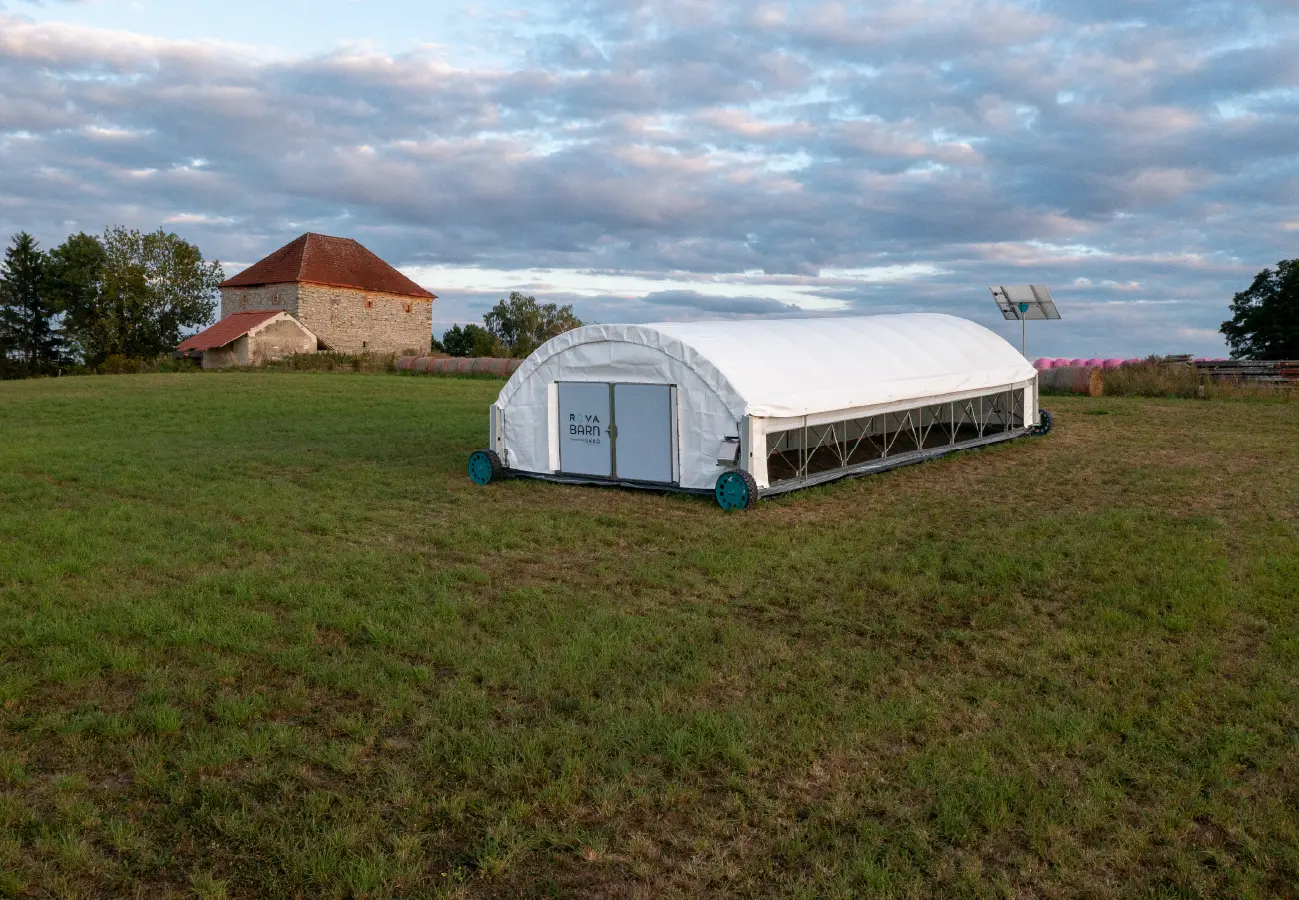
For Czech farmers, having a local distributor turns the ROVA|BARN from something they’ve only read about into something they can actually see, touch, and walk through.
Through ŠÁCHA AGRO, farmers are now able to look at a barn in their own region, have face-to-face conversations with people who understand every part of the equipment, and receive installation and service in their own language. Their team has been trained directly by UKKÖ, so the advice farmers receive comes from real, hands-on experience.
As farmers ourselves, we know that buying an advanced piece of equipment from another continent requires trust, so being able to touch the steel, see the automation, ask questions, and know someone is close by for service makes the decision a lot easier.
For us, meeting the ŠÁCHA AGRO team felt familiar from the start. Their team is young, dynamic, and deeply experienced in agriculture, not unlike our own team at UKKÖ, where our engineers, builders, and farmers all work side by side.
We watched how they support their customers day to day, visiting farms and troubleshooting issues in person, and aside from speaking Czech instead of English or French, their connection to local farmers felt the same as what we see at home. It’s built on trust, shared experience, and steady support.
What We Saw in Czech Fields
During our visit, we travelled through Pisek near ŠÁCHA AGRO’s home base, České Budějovice where the Zeme Ziviteka tradeshow takes place, and the Dráchov region where we installed the first ROVA|BARN.
The landscape around these areas is fairly flat, dotted with small farms rather than large blocks of land. The growing season runs longer than in Manitoba, and locals told us that the snow and cold usually last only a few weeks.
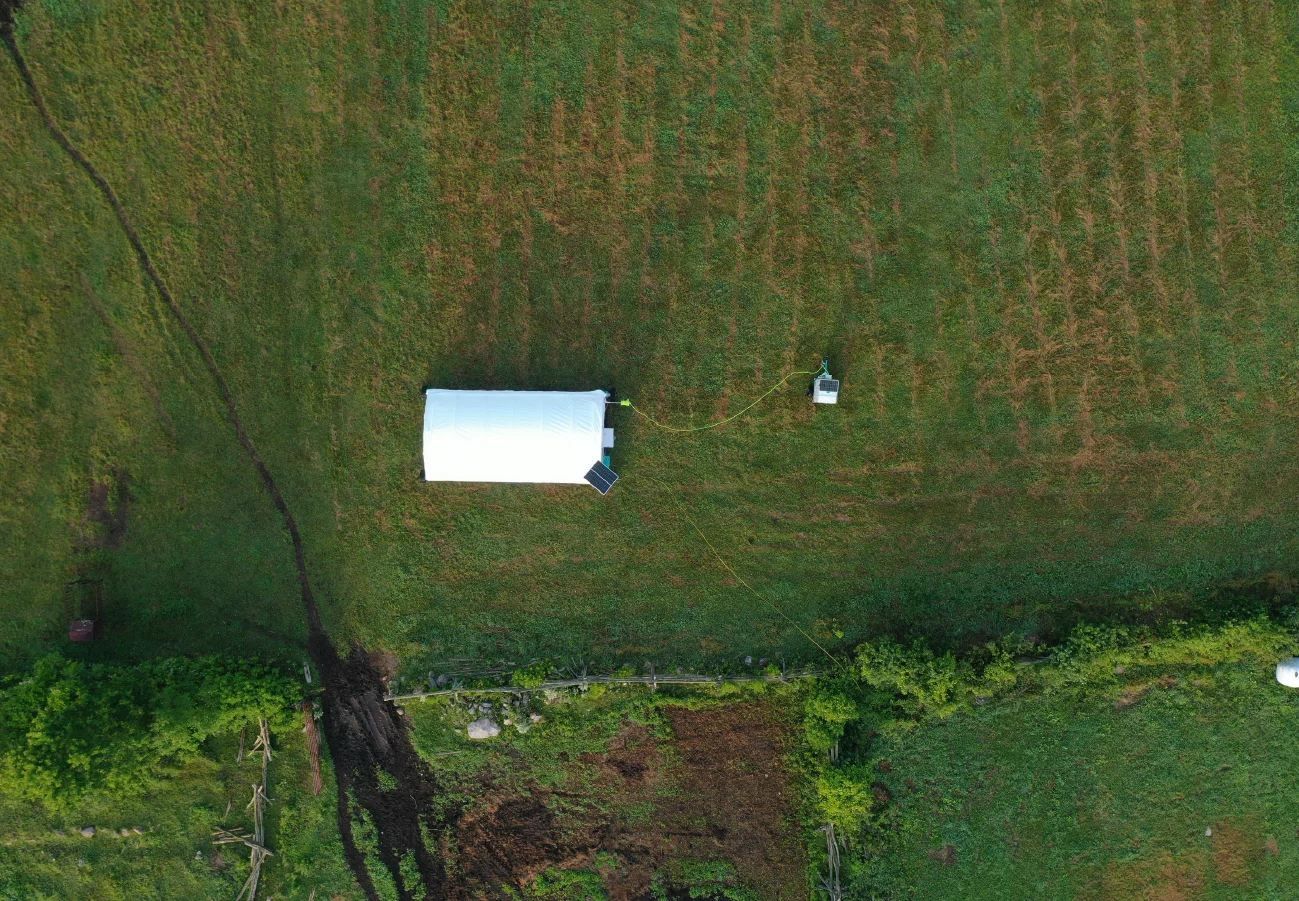
One detail really stood out to us—many of the fields looked dusty, with lower organic matter after years of tillage. Luckily, the ROVA|BARN does more than raise pasture poultry, and daily movement and even manure spread can help rebuild soil structure and add organic matter over time. Our mobile barns offer a clear path toward long-term soil regeneration in this region.

The First ROVA|BARN in Czechia
The first ROVA|BARN700 in Czechia went to Mr and Mrs Uzel. Their farm is diverse, and they raise pigs, geese, guinea fowl, layers, sheep, cattle, and cut hay for their animals.
We installed the ROVA|BARN700 for layers on their farm and trained the ŠÁCHA AGRO team on assembly, setup, and technology transfer. The process looked similar to our builds in Canada thanks to the modular design.
When someone orders equipment from another country without seeing it in person first, they naturally have a lot of questions, and the Uzels were no different. Is the structure strong enough? Is the steel high quality? Will this barn last on my land and in my weather?
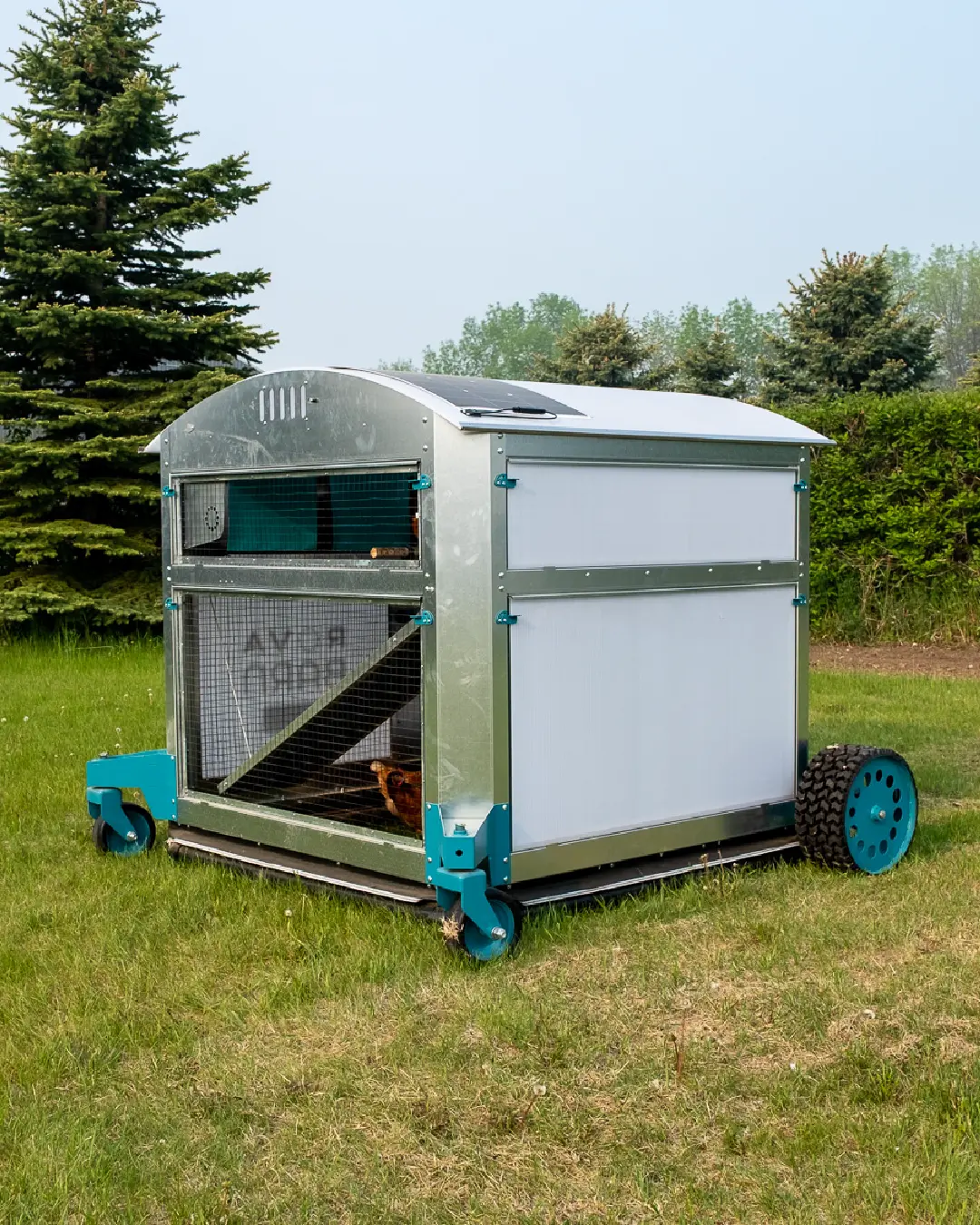
Walking through the barn with them and showing the galvanized frame, the drive system, and the automated features helped answer those questions. They were impressed with the ROVA’s build quality and strength.
But the moment it all came together was two months later, when they decided to order three more barns to grow their operation.
That choice showed that they really trusted the equipment, saw the value in the automation, and felt confident bringing more ROVA|BARNs onto their land.

What Matters to Czech Poultry Farmers
Poultry farmers in Czechia face challenges that look familiar to producers in many other countries. Labour shortages make it hard to scale, and limited poultry processing options push many farms toward layers instead of broilers.
Long days and manual work add pressure to small teams and family operations, shaping how farmers think about growth and efficiency.
Against that backdrop, two features of the ROVA|BARN came up in every conversation: the automated feeding and automated movement.
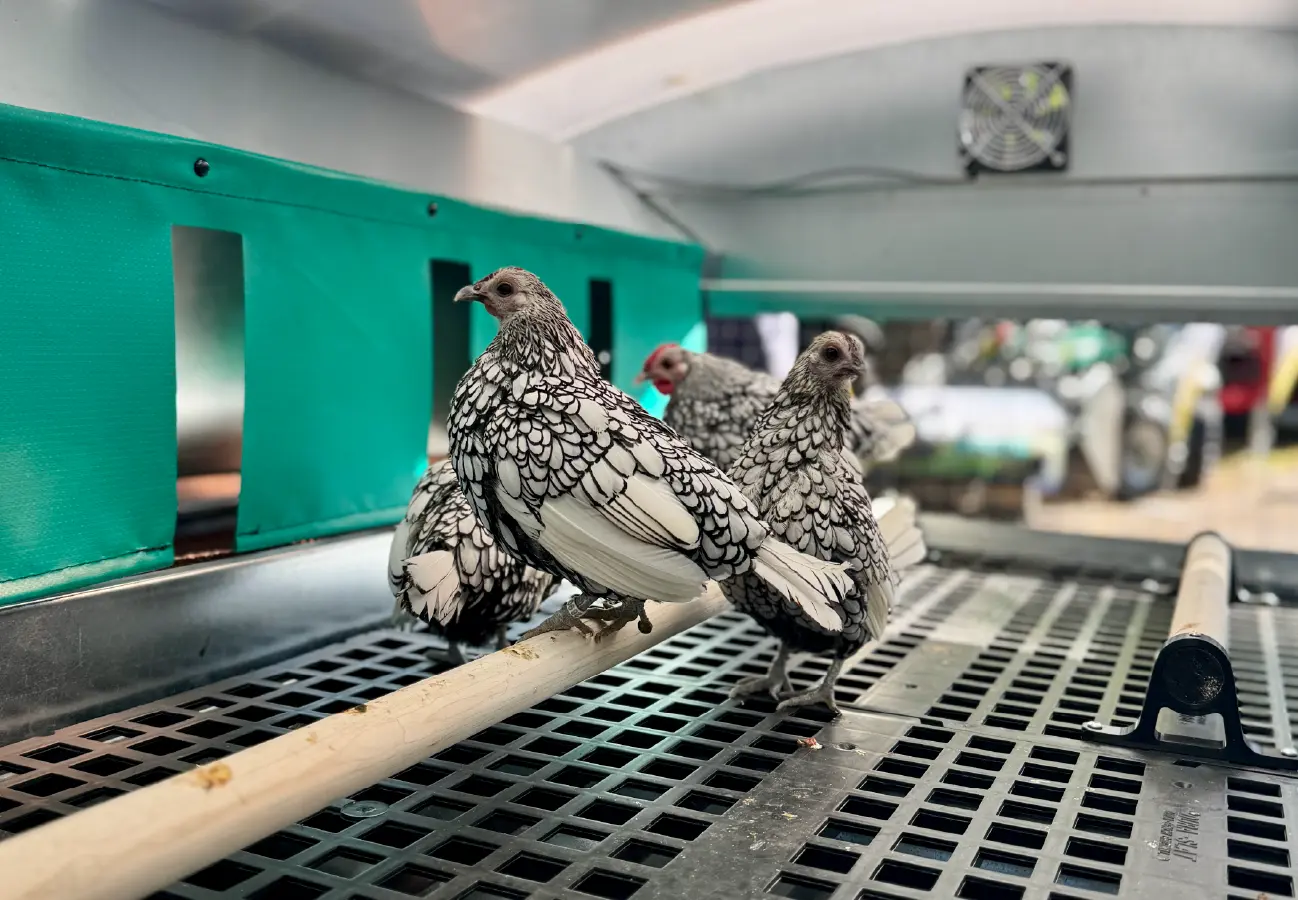
Those are the jobs that take the most time and physical effort in a pasture poultry system, and when the barn moves itself and runs feed on a schedule, farmers gain hours back in their day and ease the strain on their bodies and staff.
Pasture access in Czechia looks similar to North America with birds grazing on open fields, but the context is a little different. The fields are smaller, the growing season is longer, and the soils often need rebuilding after years of tillage.
A self-moving pasture barn fits easily into that landscape without asking farmers to overhaul their entire operation, while also helping the soil recover over time. It’s a win-win.

The Zeme Ziviteka Tradeshow
During the trip, we also attended Zeme Ziviteka, the largest agricultural exhibition in the Czech Republic with the ŠÁCHA AGRO team. It was the first time that Czech farmers had the chance to see the ROVA|BARN in person.
Farmers walking by often stopped, looked twice, and stepped inside for a closer look. Most conversations at the booth took place in Czech, with our team nearby to help when needed.

The questions farmers asked were almost identical to what we hear in North America: they wanted to know how the moving system handles hills or windy conditions, what happens during winter, and how long the barn is built to last.
One topic felt new for us, though—many European farmers were really focused on galvanizing. They asked about the coating, the thickness, and how it compares to paint. Durability is a major priority in this region, so the long lifespan of a galvanized frame grabbed their attention immediately.

Czech Farm Culture
Travelling between towns in Czechia feels very different from the Canadian prairies. Instead of long stretches of open road between communities, you move from one village to the next, passing small farms and clusters of families every few kilometres. The scale feels much closer and a lot more connected.
People everywhere welcomed us with real warmth. The farmers and their families took the time to share their stories, sit down for meals, and talk about their work. Daily life in Czechia is social, the meals are long, the food is homegrown, and there’s always a drink on the table.
During the ROVA|BARN install, we ate with the farmer’s family each day. They served chicken, stew and potatoes, pork chops, and on the last day, a homemade “hamburger.” The dishes were different from home, but the feeling was the same, and on farms, meals carry a sense of pride. People feed you what they raise and the stories flow easily around the table.
One moment that stuck with us was a small joke about local chocolates often having alcohol in them. Someone said, “You cannot make good stories if you only drink milk,’ and it captured the humour and hospitality we felt the entire trip.
The only real challenge we faced was the language barrier. A few people spoke some English, but not many, and we wished we could ask more questions. It reminded us how important it is to have ŠÁCHA AGRO as a local voice, able to explain the ROVA|BARN in Czech and to support the farmers who use it every day.