Why This Partnership Made Sense
What stood out to us early on in our conversations with Happy Farmer was the way they talked about labour, not in general terms, but in the context of what a normal day actually looks like on a pasture poultry farm.
In these systems, labour shows up in small, repeated tasks that don’t seem significant on their own, like moving shelters, refilling feed, checking water, and walking the field multiple times a day, but over the course of a season, those tasks shape how much time and energy the system takes to run.
Their questions reflected that understanding, because instead of focusing on the technology itself, they were focused on how it would fit into that routine, asking how often the barn moves, what happens when something doesn’t go as planned, and how the system would integrate into an existing setup without adding new complications.
That approach mirrors how most farmers evaluate something new, which is not based on features, but on whether it makes the work more consistent and manageable over time.
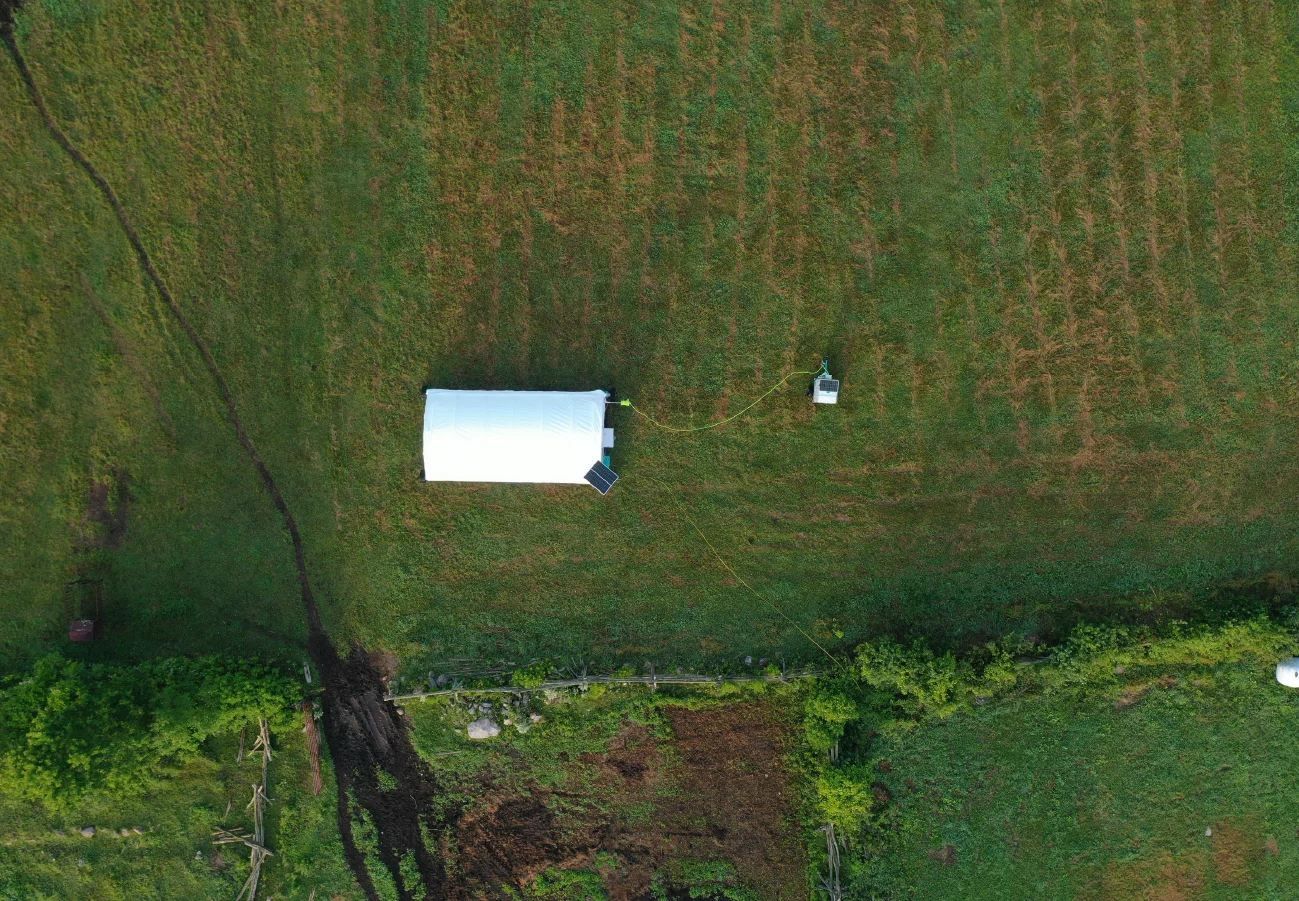
They also made the decision to run a ROVA|BARN themselves, which means they are working through the same details any farmer would, from setup to daily use, rather than relying on secondhand information, and that changes the nature of the conversation when someone reaches out with questions.
A Shared Approach to Pasture Farming
At a basic level, both UKKÖ and Happy Farmer are working toward the same outcome, which is having birds on fresh pasture, giving the land time to recover, and building a system that can hold up day after day without breaking down under the weight of daily work.
This way of farming is not new, and moving animals across pasture has been part of agriculture for a long time, but what has always limited it is the amount of effort required to do it consistently, especially as flock sizes increase or as farms try to scale their operations.
That is where many systems begin to strain, because the idea itself works, but the execution becomes harder to maintain over time.
The ROVA|BARN does not introduce a new method, but instead keeps the same principle and changes how manageable it is to follow through on it, making movement more consistent, integrating feed and water into the structure, and creating a routine that is easier to maintain across a full season.
Happy Farmer’s existing coops are built around that same idea, and while the level of automation differs, the foundation stays the same, which is to keep birds moving and make that movement sustainable for both the farmer and the land.
What Changes for U.S. Farmers
Before this partnership, most of our conversations with U.S. farmers happened over email or calls across time zones, which worked well for initial interest, but left a gap once the questions became more specific and tied to a particular farm.
Questions about site setup, how the barn would move across a certain type of field, or how it would fit into an existing routine are difficult to answer from a distance, and even small uncertainties can slow decisions when a system is new.
Having a team based in the U.S. changes that dynamic, because farmers are now able to speak with people who are working in a similar context, with similar weather patterns, land types, and production goals, and who have already worked through those same questions on their own farm.
As a result, the conversation shifts from general understanding to practical application, focusing on what a normal day looks like once the system is running, what requires attention, and what becomes part of the background.
Looking at the System in Practice
Pasture systems are simple in principle, but they rely on repetition, with the same tasks carried out every day, often in changing conditions and across a full season.
Moving birds onto fresh ground, keeping feed and water consistent, and adjusting for weather are all part of that routine, and while none of these tasks are complex, they add up over time and shape how manageable the system feels on a daily basis.
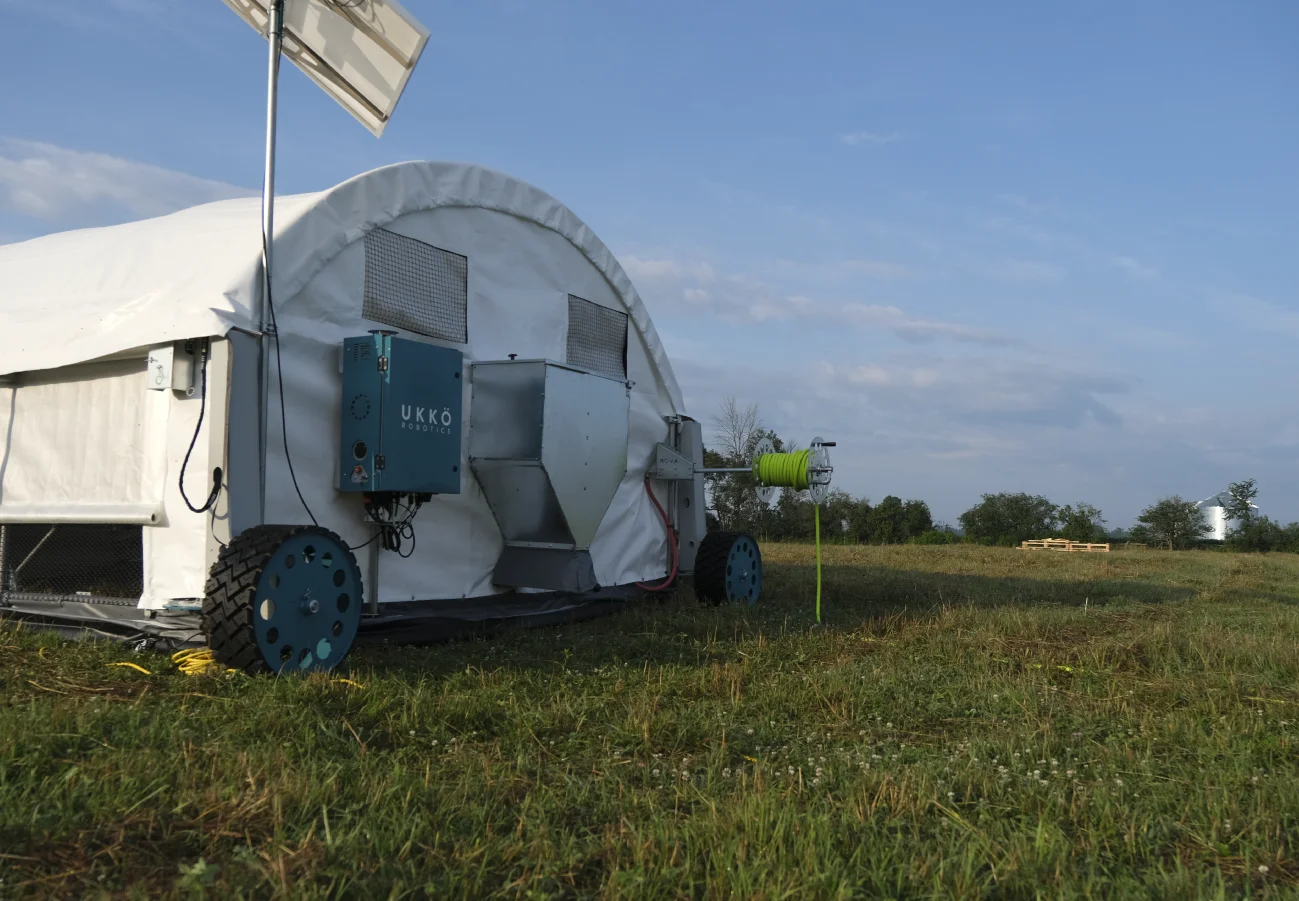
The ROVA|BARN reduces some of that repetition by following a set movement schedule, which allows birds to be brought onto fresh pasture without manual relocation, while integrated feed and water systems reduce the need to carry supplies across the field.
Ventilation adjusts based on conditions inside the barn, which becomes more noticeable during temperature swings, but beyond that, the system remains familiar, with birds behaving as they do on pasture, the land still requiring observation and care, and the farmer continuing to make the decisions that guide the operation.
Different Farms, Different Scales
Pasture poultry looks different depending on the farm, with some operations raising a few hundred birds as part of a diversified system, while others are working at a larger scale with a need for more consistent output.
The structure of the work shifts depending on that scale, as smaller farms tend to prioritize flexibility and simplicity, while larger farms place more emphasis on consistency, where even small inefficiencies can become more noticeable over time.
The ROVA system reflects that range, with smaller units often used in backyard or homestead settings where manageability is key, and larger barns used in operations where routines need to hold steady across a higher number of birds.
The movement system itself remains consistent, but how it fits into the farm depends on the context, allowing farmers to choose something that aligns with how they already work rather than requiring them to adapt their entire system around it.
Why Interest Is Growing
Interest in pasture-based poultry has been building over time, although the reasons for that interest are not always the same.
For some farmers, the appeal lies in spreading impact across the land rather than concentrating it in one place, while for others it connects to direct-to-consumer models where people want a clearer understanding of how their food is raised.
There is also a practical element, as fixed infrastructure can limit how a farm adapts over time, whereas mobile systems leave more room to adjust and respond to changing conditions.
In the United States, there’s already a strong base of farmers working within these systems, experimenting with different approaches, refining their setups, and sharing what works in their specific context.
What is changing now is not the model itself, but the level of interest in tools that support these systems without making them more complicated, helping farmers maintain consistency without adding more work.

The People Behind Happy Farmer
Happy Farmer is built on experience that comes from working directly with animals and running small-scale operations over time.
Daniel Kauffman spent years raising livestock and working with egg production, which shapes how he thinks about housing in terms of what holds up in practice and what becomes difficult to maintain over time, while Chris Stoltzfus grew up on a multi-generation farm in Pennsylvania and continues to stay connected to that way of working.
What comes through in conversations with them is a focus on fit, with a clear understanding that not every system works for every farm, and that a large part of their role is helping people figure out where something makes sense and where it does not.